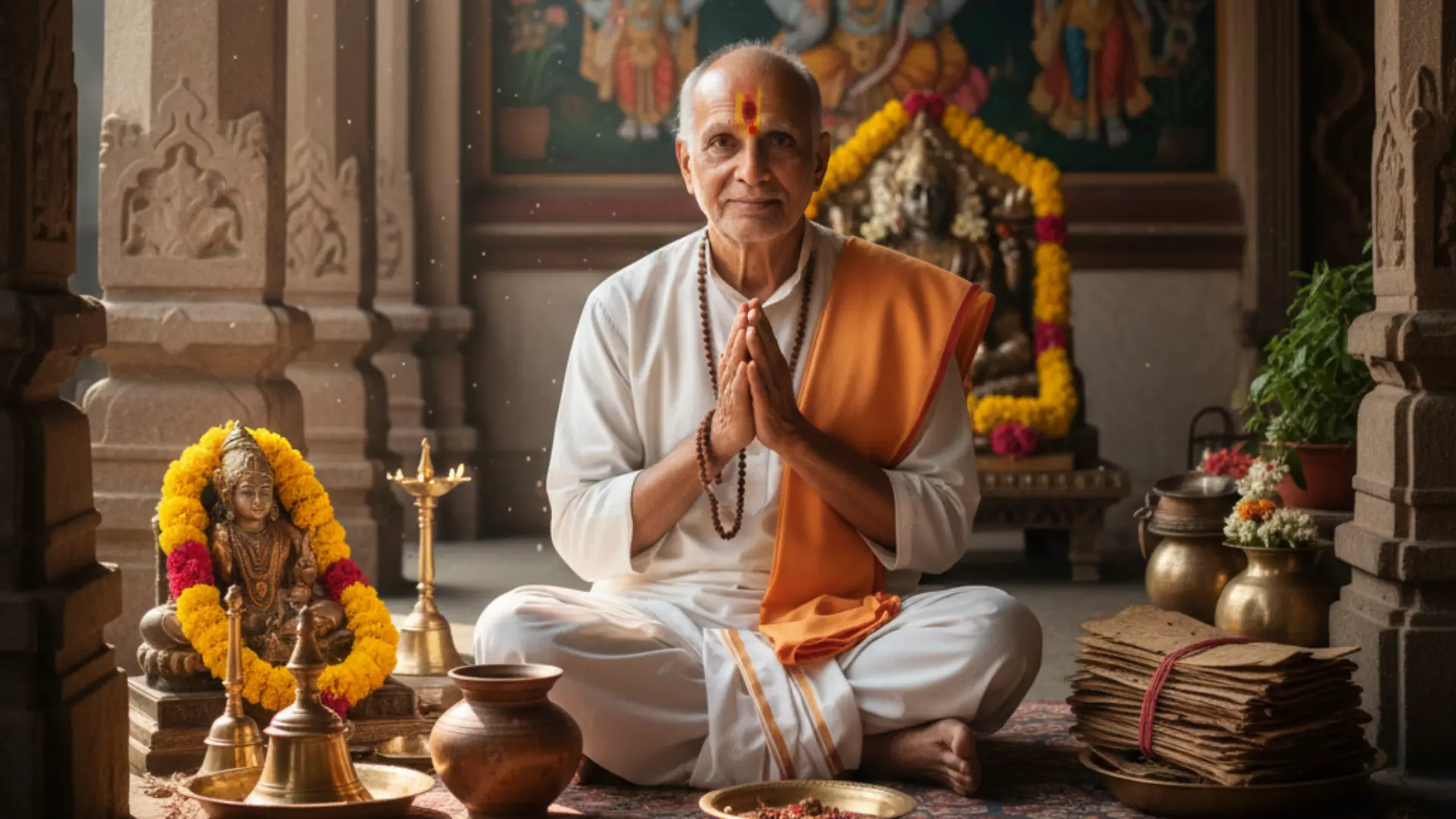
Baglamukhi, also known as Pitambara Devi, is one of the ten Mahavidyas in Hindu tradition. She is as the goddess who has the power to “stambhan,” meaning to stop or immobilize negative forces, harmful speech, and hostile intentions. Read the Baglamukhi Chalisa and performing her Aarti are considered powerful devotional practices for protection, confidence, and success.
Who Is Goddess Baglamukhi?
Baglamukhi is depicted wearing yellow garments and seated on a golden throne. She is often shown holding a club while restraining the tongue of a demon, symbolizing the power to silence falsehood, gossip, and destructive speech. Devotees worship her to overcome enemies, legal disputes, fear, and mental unrest.
Yellow is especially associated with her energy. Turmeric, yellow flowers, and yellow clothing are commonly used during worship.
Benefits of Baglamukhi Chalisa
1. Protection from Enemies
The most well known benefit is protection from hidden and open adversaries. Devotees believe the Chalisa helps neutralize harmful intentions and provides spiritual defense.
2. Success in Court Cases
Many people recite the Chalisa when facing legal matters, property disputes, or administrative obstacles, seeking clarity and favorable outcomes.
3. Control Over Negative Speech
Baglamukhi is worshipped to reduce slander, rumors, false accusations, and toxic communication.
4. Increased Confidence and Courage
Regular recitation can strengthen determination, self control, and mental stability.
5. Removal of Fear and Anxiety
The devotional rhythm of the Chalisa may help calm the mind and reduce worry.
6. Victory in Competitions
Students, job seekers, and business owners often pray to her for success in exams, interviews, and negotiations.
7. Improvement in Concentration
Chanting with focus can sharpen attention and discipline.
8. Spiritual Protection
Devotees believe the practice creates a protective aura and supports inner resilience.
Benefits of Performing Baglamukhi Aarti
The Aarti is a concluding ritual that expresses gratitude and devotion.
1. Invokes Divine Blessings
Performing the Aarti is believed to invite grace and strengthen one’s connection to the goddess.
2. Purifies the Home Environment
The combination of prayer, lamp light, and incense can create a peaceful atmosphere.
3. Enhances Positive Energy
Many devotees experience greater emotional steadiness and optimism.
4. Strengthens Faith
A daily Aarti routine reinforces devotion and consistency.
5. Supports Family Harmony
Families who pray together often report a stronger sense of unity and calm.
Best Time to Recite Baglamukhi Chalisa and Aarti
- Early morning after bathing
- Evening during sunset
- Tuesdays and Thursdays
- During Navratri
- On special sankalpa days such as 11, 21, or 40 consecutive days
Items Required for Worship
- Yellow cloth for the altar
- Picture or idol of Baglamukhi
- Turmeric (haldi)
- Yellow flowers such as marigolds
- Ghee lamp
- Incense sticks
- Sweets like besan ladoo
- Clean water
- A bell (optional)
Complete Procedure for Baglamukhi Chalisa and Aarti
Step 1: Prepare Yourself
Take a bath and wear clean yellow clothes if possible. Sit facing east or north.
Step 2: Prepare the Altar
Place the image of the goddess on a yellow cloth and arrange the offerings.
Step 3: Sankalpa (Intention)
Mentally state your purpose, such as protection, success, clarity, or spiritual growth.
Step 4: Light the Lamp and Incense
Offer the flame and fragrance with devotion.
Step 5: Offer Flowers and Turmeric
Place yellow flowers and turmeric before the goddess.
Step 6: Chant Mantra (Optional)
A commonly recited mantra is:
Om Hleem Baglamukhi Sarva Dushtanam Vacham Mukham Padam Stambhaya Jihvam Kilaya Buddhim Vinashaya Hleem Om Swaha
Step 7: Recite the Baglamukhi Chalisa
Read the Chalisa slowly and attentively.
Step 8: Perform the Aarti
Wave the lamp clockwise before the deity while singing the Aarti.
Step 9: Offer Prasad
Present sweets and then distribute them among family members.
Step 10: Closing Prayer
Bow and offer gratitude for guidance and protection.
How Many Times Should You Recite?
- Daily: 1 time
- For specific intentions: 11 times
- Dedicated practice: 21 or 40 days
Consistency is often considered more important than large counts.
Important Precautions
- Maintain respectful and ethical intentions.
- Avoid using prayer to wish harm on others.
- Keep the worship area clean and peaceful.
- Practice with sincerity rather than fear.
Spiritual Meaning of Baglamukhi Worship
Baglamukhi symbolizes mastery over speech, thoughts, and impulsive reactions. Her worship is often understood as a way to stop negativity within oneself as much as outside. Through disciplined recitation, devotees cultivate silence, discernment, and inner strength.
Who Can read a the Baglamukhi Chalisa?
Anyone can read the Chalisa with devotion, including:
- Students
- Business owners
- Professionals
- Homemakers
- Spiritual practitioners
No advanced ritual knowledge is required for simple devotional recitation.
Conclusion
The Baglamukhi Chalisa and Aarti are best devotional practices for protection, confidence, and mental steadiness. Whether you get a relief from obstacles, support in legal matters, or deeper spiritual focus, regular worship of Goddess Baglamukhi can become a meaningful source of discipline and faith. Performed with sincerity, the practice encourages both outer and inner transformation.